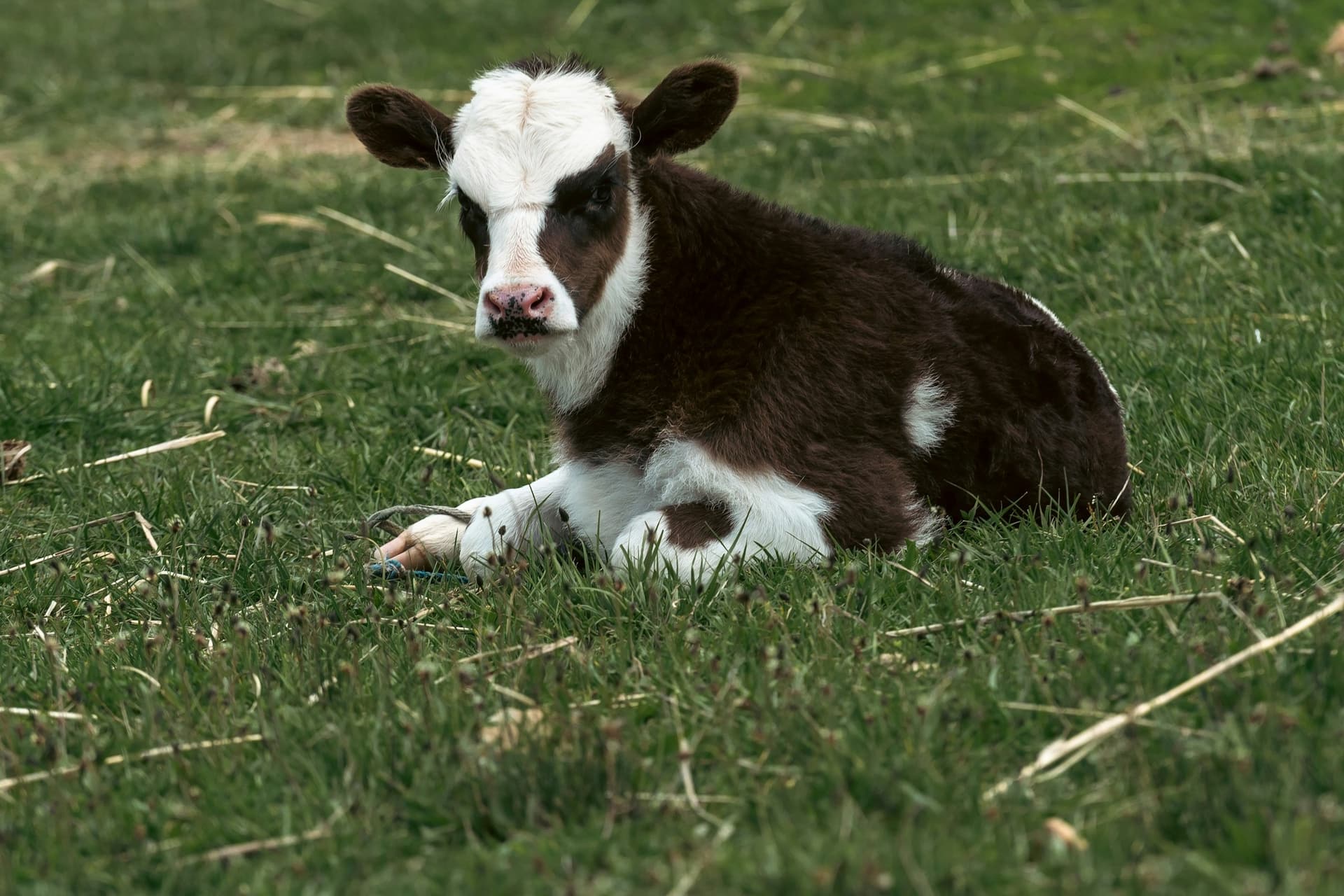
On a dairy farm, calves are weaned at eight weeks. The rule has been the same for years and nobody questions it. But the two weeks after weaning are hard every time: calves lose weight, some get diarrhoea and growth stalls for a few weeks. Starter sits in the troughs, but most calves have eaten very little of it. The problem is not the weaning age but whether the calf is ready at that age.
How does the rumen develop?
A newborn calf works much like a single-stomached animal. Thanks to the oesophageal groove, milk goes straight to the abomasum and bypasses the rumen. For the rumen to develop, it needs feed that ferments there. When the starch in the starter ferments in the rumen, butyrate is produced, and butyrate drives the growth of the papillae on the rumen wall. As the papillae develop, the rumen becomes able to absorb nutrients.
So what makes a calf ready for weaning is not its age or live weight but how much starter it eats. Many specialists accept that weaning is safe once the calf eats 1 to 1.5 kg of starter a day for several days in a row. A calf weaned before reaching that level has a rumen that cannot make up for the nutrients no longer coming in milk.
A good starter
The first job of a starter is to be eaten. Calves do not like dusty, mealy feeds. Pelleted feeds, or textured feeds that mix pellets with rolled grains, are eaten much better. Freshness matters too. Feed that sits in the trough for days, takes up moisture or gets wet with saliva lowers intake. Feeding small amounts often is the simplest way to raise intake in the first weeks.
In nutrient terms, a starter should be high in starch, highly digestible and adequate in protein. Crude protein of 18 to 22 percent on a dry matter basis is a common range. Keeping forage limited in the first weeks stops the calf filling up on it and eating less starter. But a programme with no forage at all is not good for rumen health either, and small amounts of good hay or straw should be offered as weaning approaches.
Clean water should be available from the first day. Milk does not replace water, because thanks to the oesophageal groove it does not go to the rumen. Fermentation in the rumen needs water, and a calf that does not drink eats little starter as well. This link between water and starter intake is one of the most overlooked points in the field.
The arithmetic of weaning a week earlier
Take an example, with illustrative numbers. Calves are fed 6 litres of milk replacer a day, at 125 grams of powder per litre, with the powder at 120 TRY a kilogram. The daily cost of milk replacer is 0.75 × 120, that is 90 TRY. Starter costs 18 TRY a kilogram.
Assume that by raising starter intake we can wean calves a week earlier, in week seven. Seven days of milk replacer cost 630 TRY. In those seven days the calf eats about 1.5 kg more starter a day, which is 7 × 1.5 × 18, about 190 TRY. The net saving per calf is about 440 TRY. On a farm weaning 300 calves a year, that comes to more than 130,000 TRY.
The calculation has one condition: the calf must really arrive at weaning day eating enough starter. Early weaning done by the calendar brings a loss, not a gain. So the decision to wean early should rest on tracking starter intake, calf by calf or by group.
Weaning is a process, not a day
Stopping milk in a single day is a big stress for a calf. Reducing milk step by step over the 7 to 10 days before weaning pushes the calf toward the starter and raises intake quickly. It also matters not to pile other stresses, such as vaccination, regrouping or dehorning, onto the same days.
The starter should stay the same for the first weeks after weaning. Changing the feed while the calf is getting used to a new setting lowers intake. The move to a grower feed should come only once the calf keeps eating its starter well, and it should be gradual.
Diarrhoea and the first days
Preventing calf diarrhoea starts right after birth. Feeding enough good colostrum in the first hours is the foundation of the calf's immunity. Calves that get colostrum late or in small amounts are much more prone to diarrhoea. Bottle and bucket hygiene, and mixing milk replacer at the same temperature and concentration every time, also have a direct effect on the risk of diarrhoea.
Starter does not prevent diarrhoea on its own, but a healthy rumen and a well-fed calf are more resistant to disease. A calf with diarrhoea may not eat for a few days. In that case weaning should be planned not by the calendar but by when the calf recovers and eats enough starter again.
Preparing the ration for calves
In OptiFormula TMR, separate rations can be prepared for calf and heifer groups. The feed library and ready-made sample rations are a good starting point for balancing starter and forage. Every ration shows dry matter intake and daily cost per head, so the cost of moving from milk replacer to starter can be worked out clearly.
The calf period is when the foundation of a cow's lifetime productivity is laid. A starter programme that develops the rumen on time lowers the cost of rearing calves and prepares the healthy, productive cows of tomorrow.