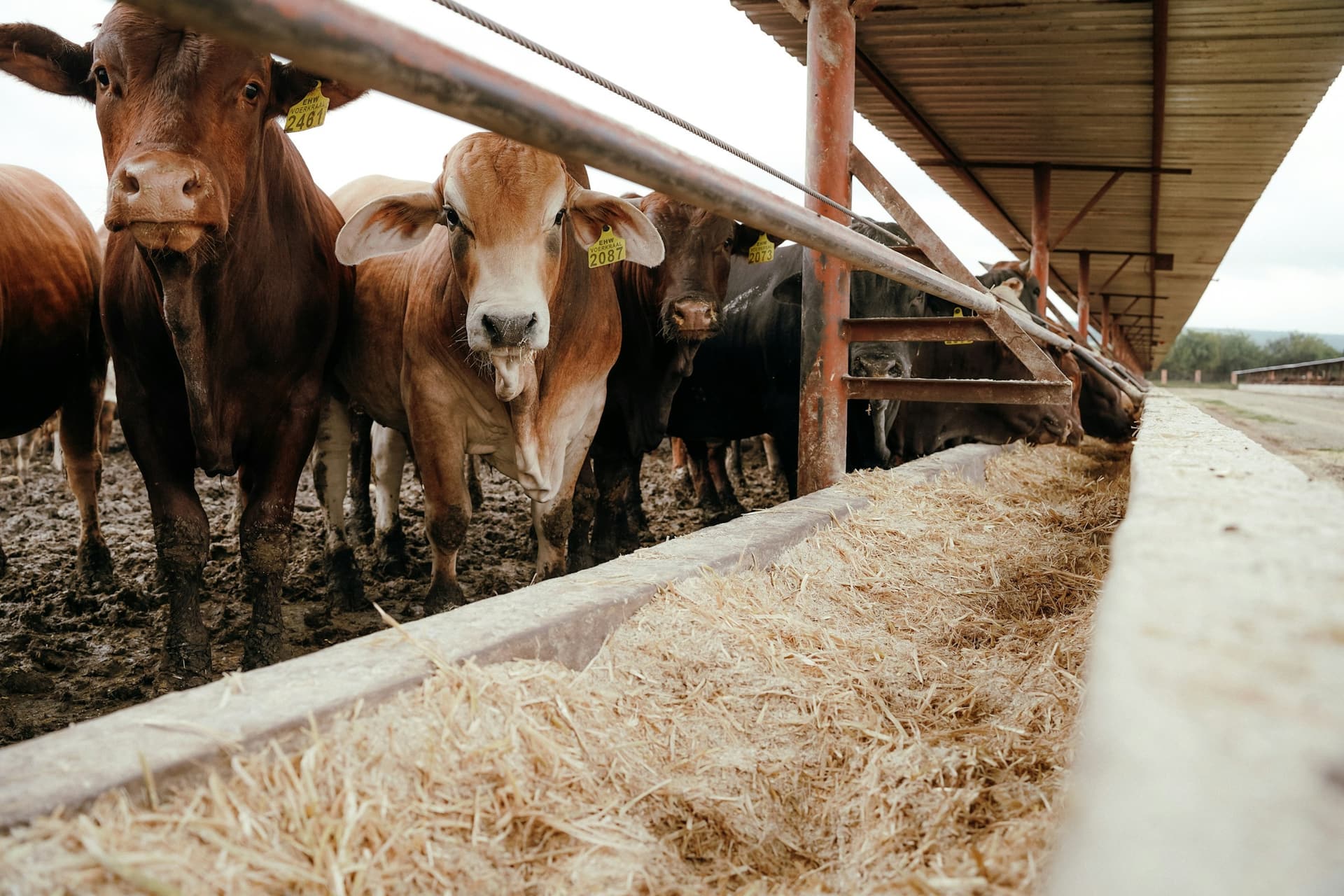
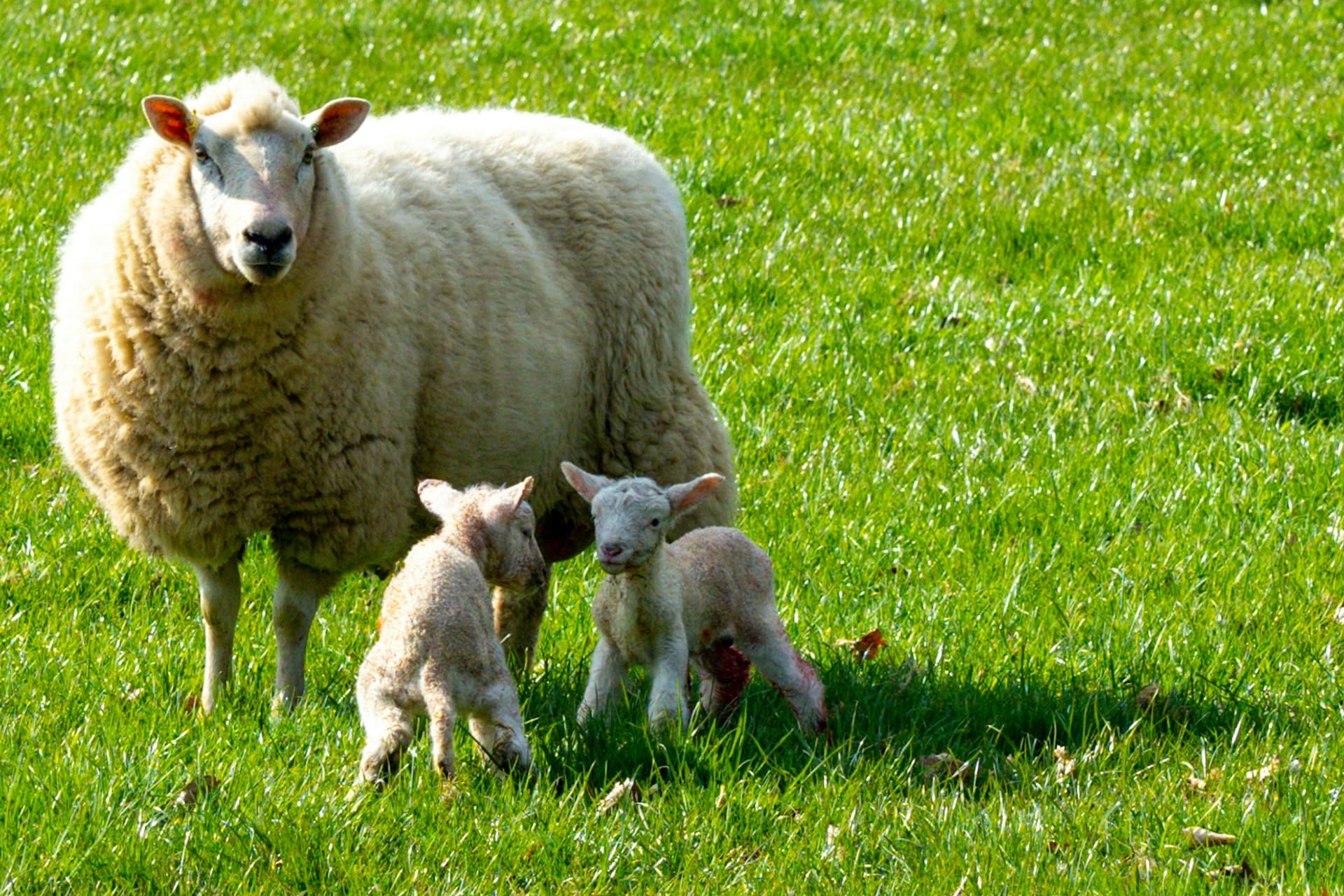
A flock of ewes five weeks from lambing. All the ewes are in the same pen and fed the same hay and the same amount of barley. A few days before lambing, several ewes go off their feed, struggle to stand and stay apart from the flock. The vet diagnoses pregnancy toxaemia. Most of these ewes are carrying twins or triplets. The single-bearing ewes on the same ration have no problems at all.
Needs rise as room shrinks
The last six weeks of pregnancy are when the lamb or kid puts on most of its weight. In this period the dam's energy requirement climbs quickly, and a twin-bearing dam needs clearly more than a single-bearing one. At the same time the growing uterus takes up space in the abdomen, rumen volume shrinks and the dam eats less than she otherwise could.
These two trends pull in opposite directions. The animal needs more energy but can eat less. The only answer is to raise the energy in every kilogram of dry matter. When energy falls short, the dam draws on her body fat quickly. When the liver is too overloaded to process that fat, ketone bodies build up and pregnancy toxaemia follows.
An example
The numbers are illustrative. Assume a 70 kg ewe carrying a single lamb needs about 14 MJ of metabolisable energy a day in late pregnancy, and one carrying twins about 17 MJ. Assume both can eat 1.6 kg of dry matter a day. For the single-bearing ewe, about 8.8 MJ per kilogram of dry matter in the ration is enough. The twin-bearing ewe needs about 10.6 MJ.
A medium-quality hay with 8.5 MJ per kilogram of dry matter comes close to what the single-bearing ewe needs. To meet the twin-bearing ewe's need, a large part of the ration has to be replaced with barley or a concentrate. In this example, replacing about half of the hay with a concentrate at 12.5 MJ per kilogram of dry matter brings the energy density up to the required level. If the single-bearing ewes get the same amount, it costs money for nothing and those ewes get fat and may have trouble at lambing.
Grouping the flock
That is why the most effective measure in late pregnancy is to group the flock by the number of young each dam carries. An ultrasound scan in mid-pregnancy makes it possible to separate single, twin and multiple-bearing dams. Where scanning is not possible, grouping by body condition score goes a long way. Very thin and very fat dams carry the highest risk of pregnancy toxaemia.
Grouping also helps with feeder space. In a group fed concentrate in late pregnancy, every dam needs to be able to reach the trough at the same time. When the trough is too narrow, dominant dams eat more than their share and the thin dams that need it most are pushed to the back.
A goat is not a sheep
Sheep and goats are often handled under the same heading, but there are important differences in how they are fed. Goats are more selective eaters, prefer leaves and browse, and are more inclined to sort the ration in front of them. In dairy goats the lactation curve and milk composition differ from sheep as well. So goat rations need to be prepared with requirement estimates specific to goats. Systems such as INRA 2018 treat sheep and goats separately.
One of the most critical differences is copper. Sheep are very sensitive to copper, and it builds up in their liver. A mineral mix made for cattle or goats can lead to copper poisoning in sheep over time. Goats tolerate copper much better than sheep. On farms where sheep and goats are fed together, setting the copper level of mineral mixes and concentrates by what sheep can take is the safest route.
In goats, the risk of pregnancy toxaemia is at least as high as in sheep and calls for care especially in high-yielding breeds carrying multiples. The goat's habit of sorting the ration can lead to uneven intake of concentrate. Feeding forage and concentrate as a well-mixed ration, or splitting the concentrate into several meals a day, reduces the risk of both toxaemia and rumen acidosis.
After birth
With birth, the requirement changes once more. In the first weeks of lactation, especially in dams suckling twins, energy and protein needs are even higher than at the end of pregnancy. The rumen expands again in this period and intake rises, but the rise takes a few weeks. Moving to the lactation ration gradually over a few days, rather than changing the ration all at once after birth, reduces digestive problems.
Whether lambs and kids get enough colostrum in the first hours after birth also depends on how the dam was fed in late pregnancy. A well-fed dam produces more colostrum and colostrum of better quality. The late-pregnancy ration thus decides the health of the young as well as the dam.
Solving the ration by group
The small ruminant module of OptiFormula TMR calculates requirements for sheep and goats with models such as INRA 2018 and CVB. You can solve a separate ration for each group of animals, use forage analyses together with the feed library and start from ready-made sample rations. Two rations for single and twin-bearing groups, with the same forages and different amounts of concentrate, can be prepared in a few minutes.
Feeding the whole flock one ration in late pregnancy is easy, but the dams that need the most pay the price for that ease. Grouping the flock and giving each group its own ration reduces both losses and feed cost.