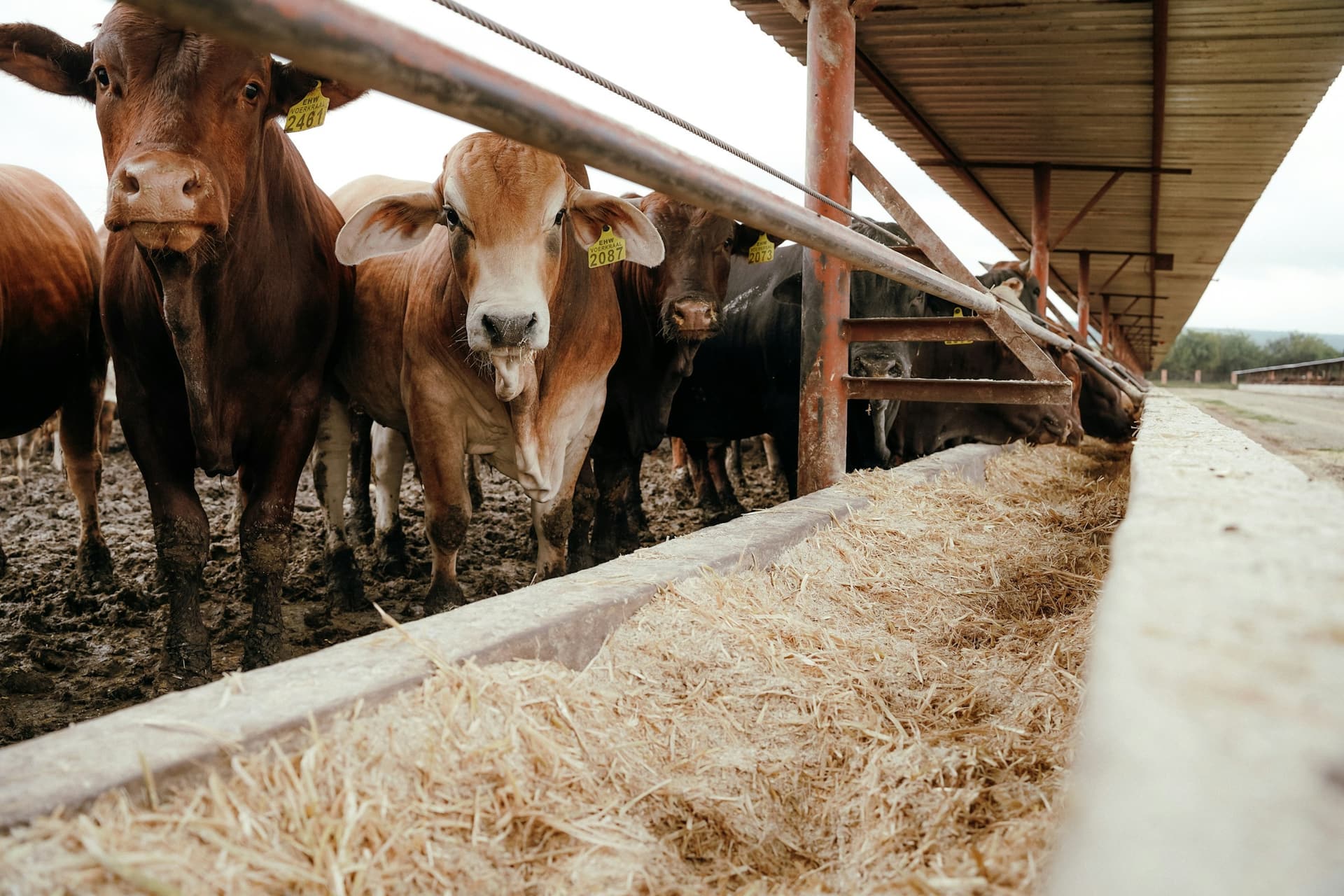
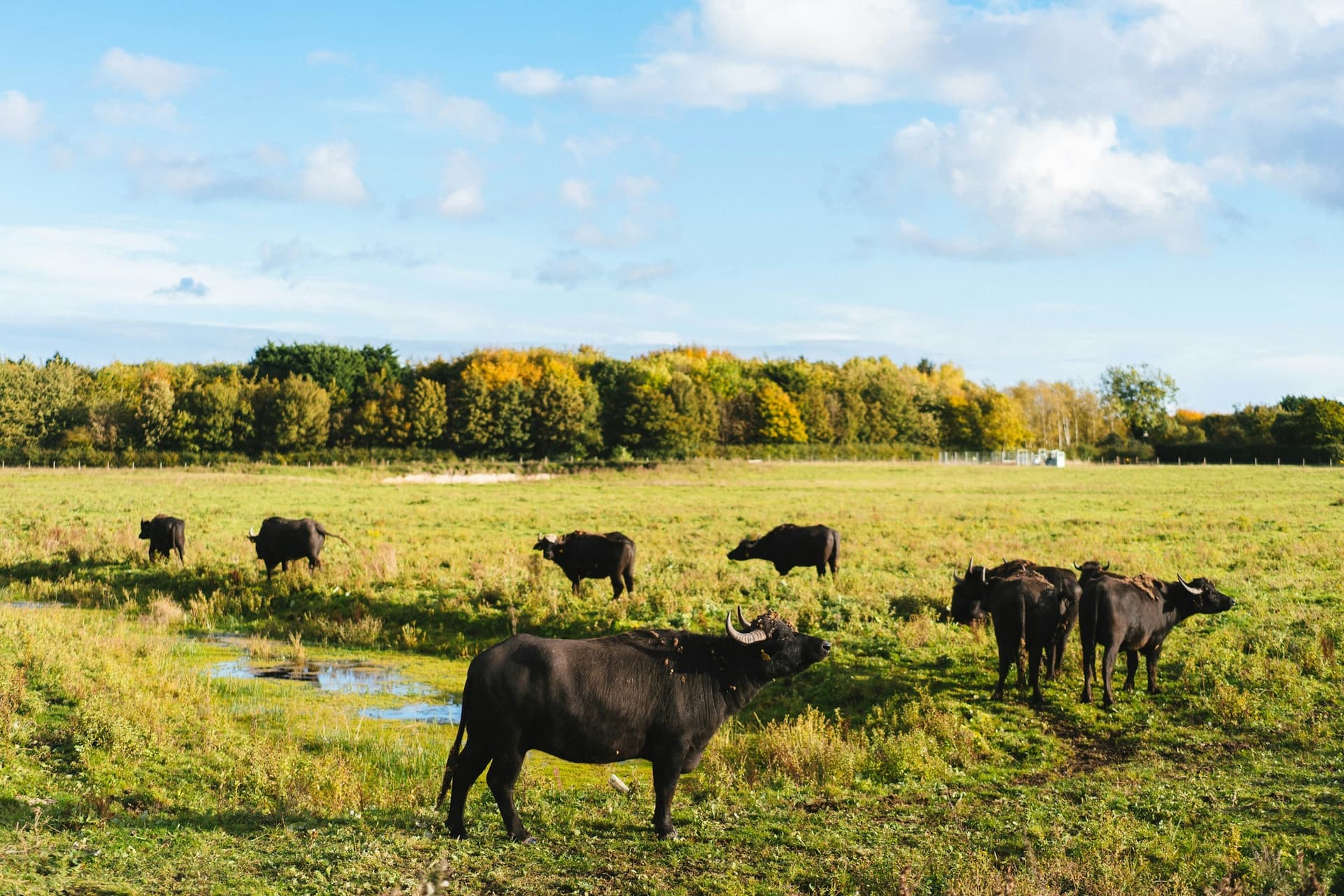
A farm has kept dairy cows for years and added buffalo to the herd a few years ago. Buffalo yoghurt and clotted cream sell at a good price. The ration, though, is built on the same logic as for the cows: concentrate is fed by daily milk yield. The buffalo milk below expectations, many lose condition in mid-lactation and few show heat. The problem is not the buffalo. It is feeding the buffalo as if it were a cow.
How many kilograms of cow milk is a kilogram of buffalo milk?
Buffalo milk is much richer than cow milk. Its fat content is often between 7 and 8 percent, and its protein is higher than in cow milk too. Because the energy in milk depends largely on fat, producing a kilogram of buffalo milk takes much more energy than a kilogram of cow milk.
Take an example, with illustrative numbers. Buffalo milk with 7.5 percent fat, 4.3 percent protein and 4.8 percent lactose contains about 4.7 MJ of net energy per kilogram. Cow milk with 3.8 percent fat contains about 3.0 MJ. So in energy terms, a kilogram of buffalo milk is worth about 1.5 kilograms of cow milk.
A buffalo giving 8 kg of milk a day is producing about 12.5 kg of cow milk in energy terms. If the ration is built for 8 kg of cow milk, she is short of about 13.5 MJ of energy a day. That gap can be covered from body reserves for a few weeks, but as lactation goes on it comes back as lost condition, falling milk and breeding problems. That is exactly what the farm in the example is seeing.
Better use of fibre
One advantage of buffalo is that they make better use of low-quality forage than cows. The microbial make-up of the rumen and the time feed spends there allow more of the fibre to be digested. So straw, corn stover and similar feeds can hold a more important place in buffalo rations than in cow rations.
That advantage alone does not meet the energy needs of high-yielding buffalo, though. A straw-based ration can suit low-yielding or dry buffalo, but a high-yielding buffalo needs good forage and enough concentrate. Taking the energy value of forages for buffalo from cow tables also leads to errors. Where possible, values or correction factors recommended for buffalo should be used.
The dry period and the run-up to calving
The dry period is often neglected in buffalo, because a dry buffalo gives no milk and her feed looks like a pure cost. Yet the success of the next lactation is largely decided in this period. A buffalo that gets too fat while dry eats less after calving and draws on her body fat quickly. One that stays too thin starts lactation with too little in reserve.
In the last weeks before calving, including small amounts of the ingredients that will be used in lactation helps the rumen adjust to the new ration. Since intake after calving can rise more slowly in buffalo than in cows, this transition should not be rushed.
Protein and the rumen
Ammonia use in the buffalo rumen can differ from cows, and some studies suggest buffalo recycle nitrogen more efficiently on low-protein rations. That means the protein requirement of low-yielding buffalo may be somewhat below cow tables. In high-yielding buffalo, on the other hand, the high protein content of the milk means the ration must also be adequate in rumen-undegradable protein and digestible amino acids. Here too, working with buffalo-specific estimates rather than taking cow values directly protects both cost and yield.
Heat and water
Buffalo have far fewer sweat glands than cows, and their dark skin absorbs more sunlight. So they are more sensitive to heat than cows. In their natural setting they cool down by going into water or lying in mud. On farms where that is not possible, shade, sprinklers and good ventilation have a direct effect on feed intake.
A buffalo under heat stress eats less and may not meet her needs however high the energy density of the ration. In summer, feeding in the cooler hours and keeping clean water plentiful at all times can do more than a change of ration.
Seasonal breeding
In many regions buffalo show a clear seasonal breeding pattern. Heats are mostly concentrated in the months when days are getting shorter. That means calvings, and with them milk production, are bunched in certain periods of the year. In markets where the milk price swings through the year, feeding needs to be planned together with the production calendar.
Breeding performance depends heavily on energy balance. A buffalo that stays in negative energy balance for a long time after calving takes longer to conceive again. So it is no surprise that few buffalo show heat when they are underfed on cow tables, as in the example above.
Solving the ration for buffalo
In OptiFormula TMR, buffalo is a module of its own. Requirements for buffalo groups are calculated with milk fat and protein taken into account. Forage and silage analyses are used together with the feed library, and every ration shows dry matter intake, daily cost per head and income over feed cost. The higher price of buffalo milk goes straight into that last figure.
That last point matters especially. Buffalo milk sells for more than cow milk, and an extra kilogram of milk covers its feed cost far more easily than in a cow. So underfeeding a buffalo is a much more expensive mistake than underfeeding a cow.
Keeping buffalo and cows in the same barn is possible. Feeding them the same ration is not. A ration that accounts for the buffalo's milk, its use of fibre and its relationship with heat protects both milk yield and the herd's breeding health.