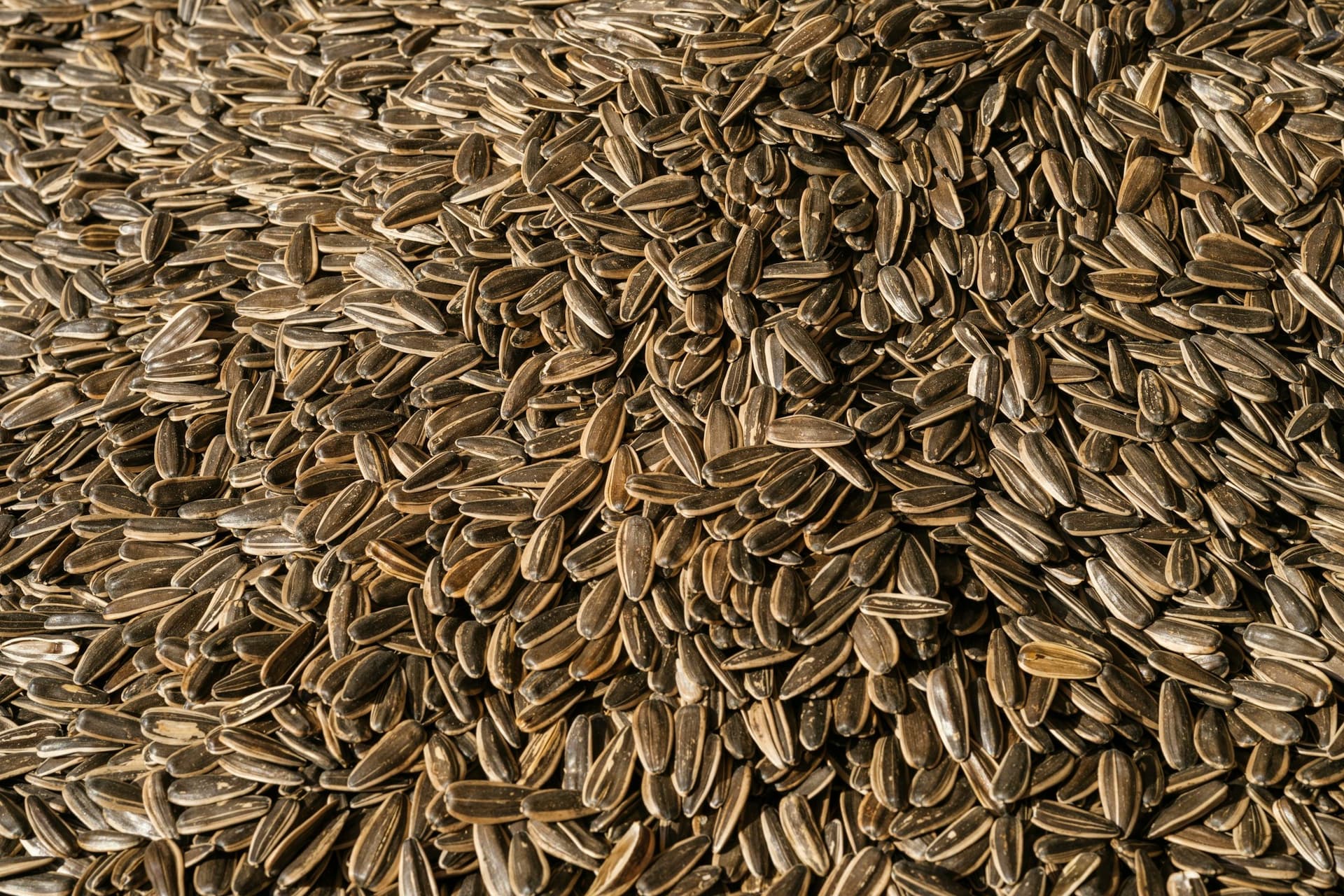
At the start of the month a well-priced lot of sunflower meal arrives at the mill, but only 300 tonnes. As usual, the nutritionist solves the formulas one after another. The broiler finisher, solved first, likes sunflower meal and uses most of the stock. By the time the layer feed comes up, there is very little left. Each formula is least-cost on its own, but the mill's total cost is not.
This happens in every mill that solves formulas one by one. A limited ingredient goes not to the feed where it is worth the most, but to the feed solved first. Changing the order changes the result, but finding the best order by trial and error is hard, and as the number of feeds grows it becomes impossible.
A simple example
Take an example, with illustrative numbers. To keep the arithmetic simple, we assume the saving is directly proportional to the amount of meal used. This month the mill will produce 2,000 tonnes of layer feed and 3,000 tonnes of broiler finisher. Solved alone, the layer feed wants 12 percent sunflower meal, which is 240 tonnes of meal and a saving of 160 TRY per tonne of feed. The finisher wants 8 percent, which is also 240 tonnes of meal and a saving of 60 TRY per tonne of feed. Together the two feeds want 480 tonnes, and the stock is 300.
If the finisher is solved first, it takes 240 tonnes and saves 3,000 × 60, that is 180,000 TRY. The layer feed is left with 60 tonnes, a quarter of what it wants, so its saving drops to a quarter as well: 2,000 × 160 × 0.25, that is 80,000 TRY. The total saving is 260,000 TRY.
When the two feeds are solved together, the question is which feed gets more out of each tonne of meal. In the layer feed a tonne of meal saves about 1,330 TRY, in the finisher about 750 TRY. So the layer feed takes the 240 tonnes it wants and saves 320,000 TRY. The remaining 60 tonnes go to the finisher and save 45,000 TRY. The total is 365,000 TRY. With the same stock, the same prices and the same feeds, the difference is 105,000 TRY a month.
What the shadow price tells purchasing
Solving together has one more by-product: the shadow price of the stock limit. It shows how much the mill's total cost would fall if one more tonne were added to the stock. In our example the last tonne goes to the finisher, so the shadow price is about 750 TRY. That is very concrete information for purchasing. If the supplier offers another lot of sunflower meal, buying even at up to 750 TRY above the current price still pays off for the mill.
Formulas solved one by one do not give this information. Each formula knows only its own constraints and cannot say how valuable an ingredient is across the whole mill. So solving together against shared stock gives not only cheaper formulas but better purchasing decisions.
Shared limits beyond stock
Ingredient stock is not the only thing that ties feeds together. Limits such as the monthly capacity of the pellet line, the size of the liquid fat tank or an ingredient that can only be fed from one bin also affect several feeds. For example, if an ingredient can only be kept in a single bin, it can be used in at most a certain number of feeds at the same time. Limits like these cannot be expressed in single formulas, but they fit naturally into a joint solve.
The accuracy of production quantities matters too. A joint solve works from how much of each feed will be produced. If the sales forecast turns out very different, the stock allocation drifts away from what is really needed. That is why it is a good habit to run the joint solve again mid-month with current production figures.
Points to watch in practice
A joint solve sometimes produces formulas that look odd on their own. Seeing less sunflower meal than expected in the finisher can bother the nutritionist responsible for that feed. What matters is being able to see why the decision was made. Reports that show how much value an ingredient carries in which feed make it easier for the team to trust the result.
Another point is keeping formulas from changing too much from month to month. If the stock allocation changes every month, the make-up of a feed, and with it animal performance, can change too. Some mills limit how much the inclusion of certain ingredients in critical feeds may change from one month to the next. That gives up a small part of the joint-solve saving, but it brings stability in production and on the farm.
One mill, one plan
OptiFormula Premium solves the formulas of a mill together against shared stock and capacity limits. Limited ingredients are allocated to the feeds where they are worth the most, and the shadow prices of stock limits become a ready guide for purchasing. Groups with several mills can go a step further, but for most mills the first and largest gain comes from solving their own feeds together.
Solving formulas one by one is a habit, and it works well for a long time. But the moment a limited ingredient comes to the table, a plan that does not see all the feeds together leaves money behind without anyone noticing.