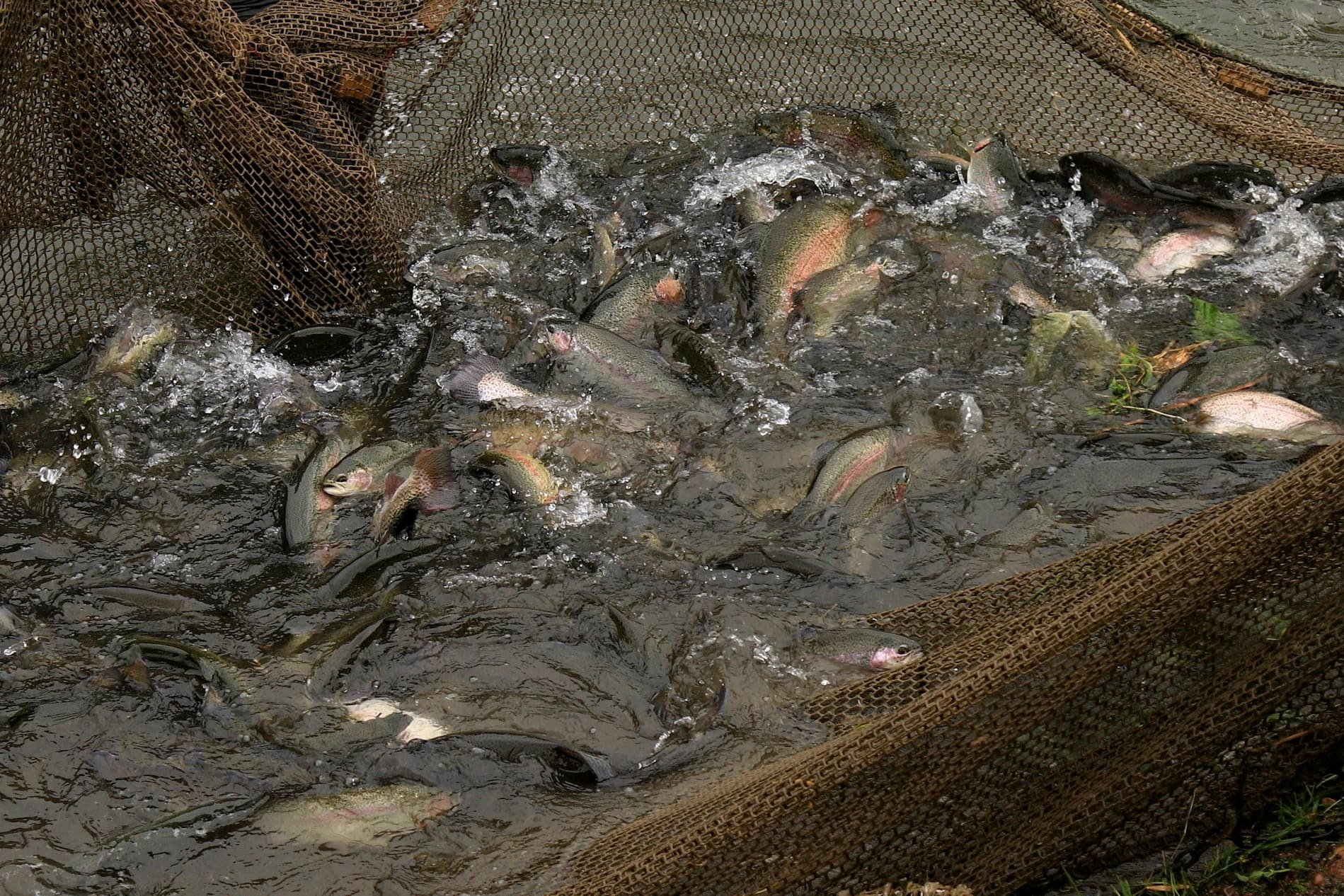
A sea bass and sea bream farm gets a cheaper feed offer from its supplier. The fish meal share in the new feed has been cut and replaced with soybean meal, wheat gluten and poultry meal. Crude protein and fat on the label are almost the same as before. The price per kilogram is 7 percent lower. Before deciding, the farm's technical manager asks a single question: what will a kilogram of fish cost on this feed?
The real yardstick: feed conversion ratio
In aquaculture, feed is the largest item in production cost and often accounts for more than half of the total. But the price per kilogram of feed says nothing on its own. What matters is how many kilograms of feed it takes to produce a kilogram of fish. That ratio is the feed conversion ratio, and it depends on feed quality, digestibility, feeding management and water temperature.
Take an example, with illustrative numbers. The current feed costs 40 TRY a kilogram and gives a feed conversion ratio of 1.5. The feed cost of a kilogram of fish is 40 × 1.5, that is 60 TRY. The new feed costs 37 TRY a kilogram, but because its digestibility is lower, the feed conversion ratio rises to 1.7. The feed cost of a kilogram of fish becomes 37 × 1.7, about 62.9 TRY. The feed that is cheaper per kilogram is about 2.9 TRY more expensive per kilogram of fish.
For a farm producing 500 tonnes of fish a year, that gap is about 1.45 million TRY. On top of that, a higher feed conversion ratio means more undigested nutrients and faeces left in the water, which harms water quality and the environment around the cages.
Digestible amino acids, not crude protein
The crude protein on the label does not show the feed's real value to the fish. The protein in fish meal is highly digestible and its amino acid profile is very close to what fish need. Plant proteins are less digestible, and lysine and methionine in particular usually fall short. A formula that keeps crude protein the same while replacing fish meal with plant sources can be much weaker than before in digestible lysine and methionine.
That is why aquafeed formulas need to be solved on digestible amino acids. As the share of plant sources rises, the amino acids that fall short can be topped up with synthetic amino acids. But how synthetic amino acids dissolve in water and how well fish use them varies from species to species. Defining ingredient values with digestibility coefficients measured in fish gives a far more accurate result than using poultry or pig values.
The limits of plant ingredients
Some plant ingredients can cause unexpected problems in fish. Certain compounds in soybean meal can cause gut inflammation in species such as trout when used at high levels. Phytate in plant ingredients reduces the availability of phosphorus and some minerals. Fibrous ingredients make digestion harder. So setting a species-specific maximum for each plant ingredient keeps an ingredient from being overused just because its price is attractive.
Phosphorus deserves special attention. Phosphorus the fish cannot use passes into the water and contributes to eutrophication. In many regions the amount of phosphorus aquaculture farms release into the environment is monitored. Calculating available phosphorus correctly and not feeding more than needed matters for both cost and the environment.
Fat and fillet quality
Fish oil is one of the most expensive ingredients in the feed and one of the most volatile in price. Partly replacing it with vegetable oils lowers cost, but it also changes the fatty acid profile of the fillet. Omega-3 fatty acids such as EPA and DHA in particular come from fish oil. If these fall below a certain level in the fillet, the product can lose value in some markets.
Some farms use a grower feed with a high share of vegetable oil and switch to a finishing feed high in fish oil for the last weeks before harvest. This approach helps lower total oil cost while protecting fillet quality. How long the finishing feed should be fed depends on the species, the water temperature and the target fatty acid level.
How the feed behaves in water
Unlike feed for land animals, fish feed meets water. How long the feed keeps its integrity in water, how fast it sinks or floats and how much dust it carries all decide whether the nutrients reach the fish. A feed that breaks up quickly in water releases part of its nutrients into the water before they reach the fish, however perfect it is on paper.
In extruded feeds, starch sources are not only energy but also the binder that holds the pellet together. Cutting starch too far for least cost can spoil extrusion quality. So the minimum starch level needed for the feed's physical quality should also be in the formula as a constraint.
Solving the formula for a kilogram of fish
In OptiFormula, digestible amino acid, available phosphorus and fatty acid targets can be defined for each species. Constraints such as maximums for plant ingredients and a minimum for starch can be used together with nutrient ratio equations in the same formula. Shadow prices then show how far the price of an ingredient, fish meal for example, can move before it loses its place in the formula.
In fish feed, the right question is never just the price per kilogram of feed. The right question is the total cost of a kilogram of fish and the quality of that fish. A formula that answers it takes feed conversion ratio, digestibility and the feed's behaviour in water into account together.