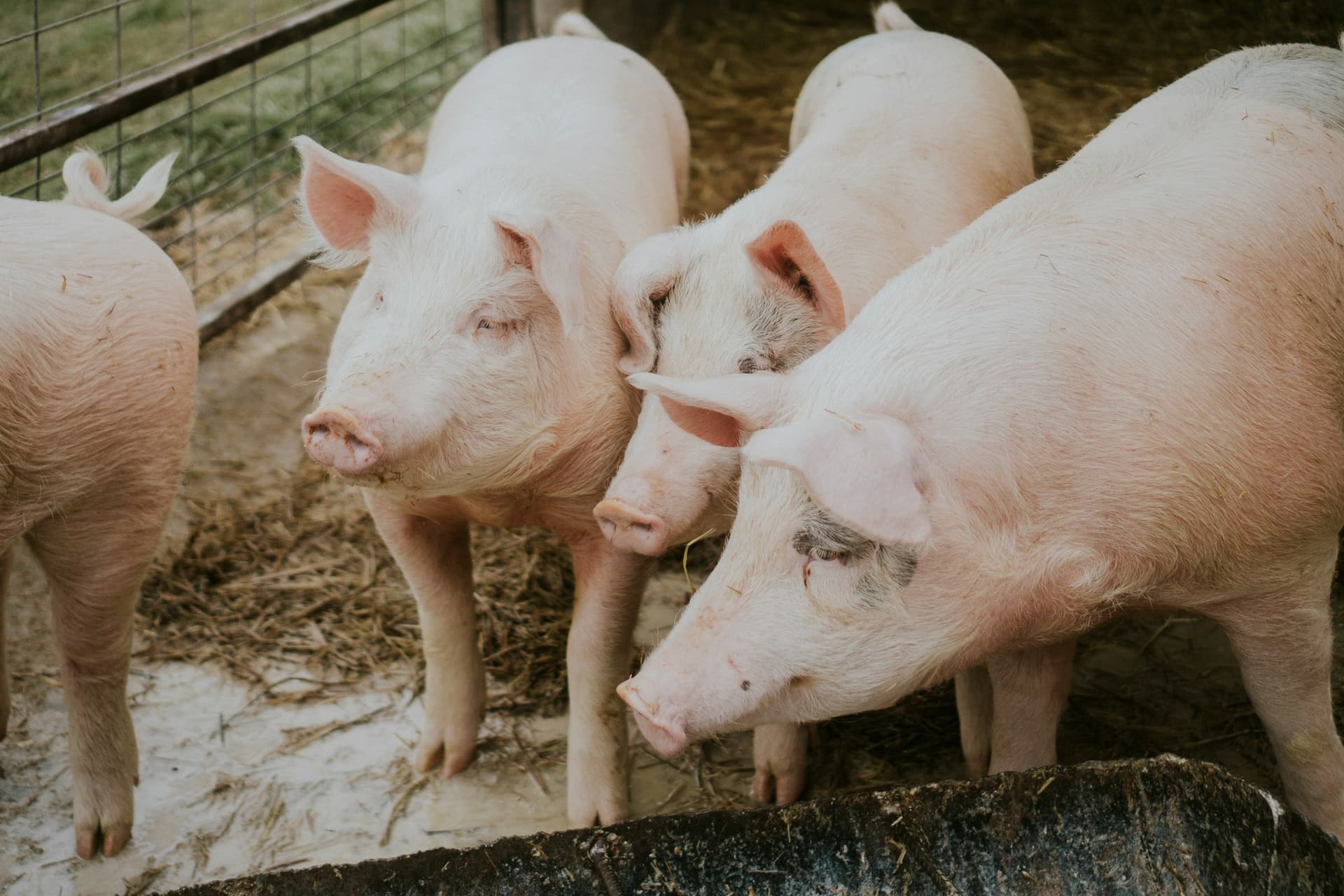
A pig integrator has used metabolisable energy in its finishing feeds for years. Purchasing finds a well-priced lot of wheat bran and sunflower meal, and the formulas use plenty of both. On paper the energy and lysine targets hold. On the farm, daily gain slips a little and feed conversion gets worse. The problem is not the ingredients but the energy unit used to measure them.
Part of the energy turns into heat
Metabolisable energy is what is left of the feed's gross energy after the energy lost in faeces and urine is taken off. But not all of it can be used for growth and maintenance. Part of it is lost as heat during digestion and metabolism of the nutrients. Net energy is what the animal can really use once that heat loss is taken off as well.
The size of the heat loss depends on the nutrient. Most of the metabolisable energy in fat becomes net energy. For starch the share is somewhat lower. For protein and fibre the heat loss is much higher. So two ingredients with the same metabolisable energy can have clearly different net energy.
An example
The numbers are illustrative. Say the ratio of net energy to metabolisable energy is about 80 percent in corn, about 60 percent in soybean meal, about 65 percent in wheat bran and about 88 percent in vegetable oil. A formula working on metabolisable energy credits high-protein and fibrous ingredients with more energy than they really supply. A formula working on net energy values these ingredients lower, and fat and cereals higher.
The effect on price is easy to see. In the formula solved on metabolisable energy, say wheat bran looks economic up to 7,500 TRY a tonne. Solved on net energy, the same formula puts bran's economic price at around 6,800 TRY. If purchasing has bought a lot at 7,200 TRY, metabolisable energy shows the purchase as profitable, while net energy says it was in fact expensive. The performance loss on the farm is that gap showing up in the animal.
The reverse also holds. Vegetable oil often looks expensive in formulas solved on metabolisable energy and is used sparingly. On net energy its value rises, and it becomes more attractive especially in hot periods, because it also lowers the heat load.
The lysine to energy ratio
Moving to net energy is not enough on its own. One of the most important relationships in pig feeding is the ratio of digestible lysine to net energy. Pigs tend to eat until they meet their energy needs. When the feed's energy falls, they eat more and take in more lysine. When it rises, they eat less. So lysine should be defined not as a fixed percentage independent of the feed's energy, but as a ratio per unit of energy.
For example, if the feed's net energy is 9.8 MJ per kilogram and the target is 0.95 g of standardised ileal digestible lysine per MJ of net energy, the feed needs about 9.3 g/kg of lysine. If cheap by-products bring net energy down to 9.5 MJ, the same ratio calls for about 9.0 g/kg of lysine. That means a lower-energy feed needs less lysine, which makes a significant cost difference in the formula. But it also means the pig has to eat more feed, and the mill's feed sales and the farm's feed cost both change.
One thing to watch when moving to net energy is resetting the targets. Converting old targets defined in metabolisable energy to net energy with a simple factor throws away most of the benefit of the new system. The net energy values of ingredients and the animal's net energy requirement should come from the same system. In the first months of the change, following old and new formulas side by side and judging them together with farm performance helps the team trust the new system.
Sex and phase
Male and female finishing pigs have different needs. Gilts and entire males grow leaner than barrows and need more lysine per unit of energy. Barrows eat more and are more prone to laying down fat. On farms that can feed by sex, working with a separate lysine and energy curve for each group improves both cost and carcass quality.
The number of phases matters too. Lysine requirement falls steadily through the finishing period. Moving from a three-phase to a four or five-phase programme makes it possible to make each feed closer to the needs of its period. How much this gains depends on feed prices and on how many different feeds the farm's feed distribution system can handle.
Phosphorus and the environment
In pig feeds, phosphorus matters for both cost and the environment. Most of the phosphorus in plant ingredients is bound as phytate and poorly used by the pig. Using phytase and solving the formula on digestible phosphorus reduces the need for inorganic phosphate and lowers the phosphorus excreted in manure. In many regions the phosphorus in manure is regulated, and that has a direct effect on formula decisions.
Keeping it together in the formula
In OptiFormula, net energy and standardised ileal digestible amino acids can be defined in the ingredients' nutrient matrix. The lysine to net energy ratio and the ratios of other amino acids to lysine are kept in every solve with nutrient ratio equations. Shadow prices and parametric analysis show up to what price a by-product is economic on a net energy basis.
In pig feed, measuring energy correctly means pricing ingredients correctly. Moving to net energy and thinking about lysine together with energy keeps a formula that is cheap on paper cheap on the farm as well.